Developers Are Done Playing by Apple and Google's Rules — Here's Where They're Going Instead
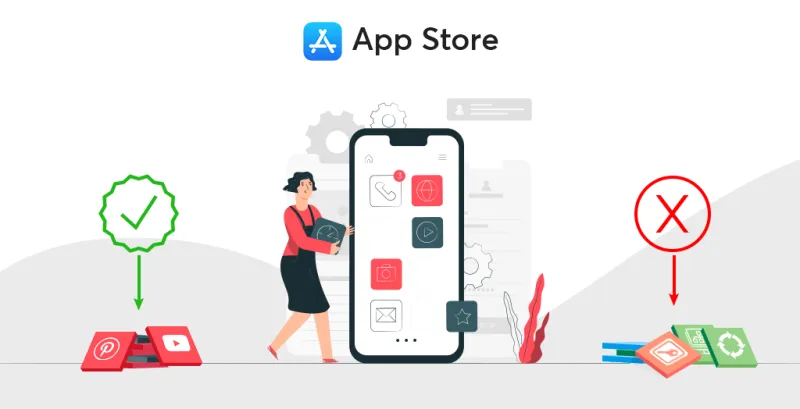
Photo: developer frustrated laptop app store rejection mobile software business, via www.aceinfoway.com
For years, getting your app into the App Store or Google Play felt like the only legitimate path to reaching users. You played by the rules, paid your 30%, and hoped the algorithm gods smiled on you. But something has shifted. Quietly, steadily, and with increasing confidence, a segment of the developer community is deciding the juice isn't worth the squeeze anymore — and they're finding other ways to get their software into people's hands.
This isn't a fringe movement of hobbyists frustrated with rejection emails. We're talking about established studios, seasoned indie developers, and even some mid-tier companies that have built real audiences over years. They're not disappearing. They're relocating.
The Math Stopped Making Sense
Let's start with the money, because that's where most of these conversations begin.
Apple and Google both take a 30% cut on most in-app purchases and subscriptions — though both have introduced reduced 15% tiers for smaller developers and long-term subscribers. On the surface, that sounds like a reasonable platform fee. In practice, for developers trying to run sustainable businesses, it can be brutal.
Consider a small team of three developers selling a productivity app at $4.99 a month. After the platform cut, payment processing, server costs, and customer support overhead, the margin gets razor thin fast. When you factor in that the App Store's search and discovery mechanisms have become increasingly pay-to-play — with Apple Search Ads now essentially mandatory for visibility in competitive categories — that 30% starts looking less like a distribution fee and more like a toll on a road that's also charging you for directions.
"I spent two years building something I was genuinely proud of," one indie developer told us, who asked to remain anonymous to avoid any friction with Apple. "Then I spent another year just trying to get people to find it. The App Store used to feel like an opportunity. Now it feels like a landlord who keeps raising the rent."
Discovery Is Broken, and Everyone Knows It
The App Store launched in 2008 with the promise that any developer, anywhere, could reach millions of users. That democratic vision has aged poorly.
With over 1.8 million apps currently available on the App Store alone, organic discovery has become nearly mythological for new entrants. The apps that surface on the Today tab are increasingly tied to editorial relationships, marketing budgets, or existing brand recognition. Smaller developers without the resources to run sustained paid acquisition campaigns are effectively invisible to new users.
Google Play faces the same structural problem, arguably worse in some categories. The search results on both platforms have become cluttered with clones, keyword-stuffed knockoffs, and apps from companies with deep advertising pockets. Genuine quality has a hard time cutting through.
This isn't a secret. Developer forums, indie game communities, and tech Twitter have been complaining about this for years. What's changed is that more developers are now acting on their frustration rather than just venting about it.
So Where Are They Actually Going?
The alternatives aren't perfect, but they're more viable than they used to be.
Direct web distribution has become the most popular escape hatch, particularly for productivity tools, creative software, and niche utilities. Progressive Web Apps (PWAs) have matured significantly — they can now handle offline functionality, push notifications, and hardware access that used to require native code. Developers who go this route keep nearly all of their revenue (minus standard payment processing fees around 2-3%), own their customer relationships, and can update their software without waiting on App Store review cycles.
Subscription platforms and storefronts like Gumroad, Lemon Squeezy, and Paddle have made it dramatically easier for solo developers and small teams to sell software directly. These platforms handle tax compliance, fraud detection, and payment infrastructure — the stuff that used to make direct sales a logistical nightmare.
The gaming world has its own parallel story. Platforms like itch.io have built genuine communities around indie games, with discovery mechanisms that actually surface quality work rather than whoever spent the most on ads. Steam, while primarily a desktop platform, has expanded its reach. And with cloud gaming services like Xbox Cloud Gaming and NVIDIA GeForce NOW growing their mobile footprints, some developers are betting that streaming will eventually sidestep the app store gatekeeping problem entirely.
The EU's Digital Markets Act has also opened a real, if still rocky, door for alternative distribution on iOS in Europe. Apple's implementation has been criticized as deliberately hostile — the fee structure for third-party app stores has struck many developers as designed to make the alternative economically unviable. But it's a crack in the wall, and developers are watching closely to see if US regulators follow suit.
The Trade-Offs Are Real
None of this is without cost. The App Store and Google Play, for all their flaws, still represent massive, built-in audiences. Abandoning those platforms means taking on the full burden of user acquisition. You're responsible for marketing, SEO, social media presence, and converting visitors who didn't arrive with any existing intent to download your app.
For developers with established audiences — email lists, social followings, loyal user bases — that trade-off can absolutely work in their favor. For someone just starting out, giving up App Store distribution is a much harder call.
There's also the trust factor. A significant chunk of users, particularly in older demographics, are genuinely uncomfortable downloading software from outside official app stores. The App Store review process, whatever its limitations, provides a level of security assurance that matters to a lot of people. Developers going direct have to work harder to establish that credibility on their own.
What This Means for the Rest of Us
If you're a regular app user, you might be wondering why any of this affects you. Here's the honest answer: it already does.
When talented developers burn out on the App Store model and either quit entirely or shift their focus to platforms where they can actually build a business, the apps available to you get worse on average. The ones who stick around are often the ones with the resources to play the advertising game — not necessarily the ones building the most interesting or useful software.
On the flip side, the developers making the jump to direct distribution are often building more premium, more focused products specifically because they're no longer chasing the mass-market App Store audience. Some of the most interesting software being made right now lives outside the app stores entirely, and most users have no idea it exists.
The duopoly isn't going anywhere tomorrow. But the cracks are showing, the alternatives are maturing, and the developers who built the ecosystem that made these platforms valuable in the first place are starting to vote with their feet. That's worth paying attention to.